
Funding-Conscious Strategies For Stormwater Asset Management in Georgia
With Georgia’s population expected to grow by 2 million people over the next two decades, increased development and impervious surfaces are expected to lead to more runoff and stormwater infrastructure needs.
“Progress has not kept up with threats from increased runoff and pollutant loads,” the report states, adding that consistent funding mechanisms haven’t been established to meet needs.
It’s indicated that the Metro Atlanta area alone sees a gap of $620 million annually in stormwater infrastructure needs. The report makes the implications clear: If structures aren’t maintained properly, there’s a direct correlation to future flooding, sinkholes and polluted drinking water sources.
“Local governments have been trying to figure out ways to get funding for a growing concern across the state.”
-Kandace Kea, Halff
The state is increasingly aware of the need for a proactive — not reactive — approach to its stormwater. “We keep hearing over and over again, that folks have to get their hands on their assets in the ground,” says Kandace Kea, a senior project manager in Halff’s Atlanta office. “They’re interested in assessing their stormwater assets and then trying to move from that more reactive mindset for maintenance to a more proactive mindset.”
But of course, it’s not that easy. “Funding is an issue,” she adds. “Local governments have been trying to figure out ways to get funding for a growing concern across the state.”
Stormwater asset management can also pave the way for identification and development of alternative stormwater infrastructure funding mechanisms, such as stormwater utilities.
There are ways to tackle the issue from both sides. Streamlining the stormwater asset management process saves time and resources on the process side. Meanwhile, long-term funding strategies make stormwater asset management more affordable.
Here’s a deep dive into what that looks like:
Streamlining Your Stormwater Asset Inventory and Assessment
The usual stormwater inventory approach involves a five-step process:
- Initial database development
- Desktop analysis and field verification
- Condition assessment
- Prioritization
- Planning and implementation
There are opportunities for applied predictive analytics to streamline this process — particularly within the first three steps. That includes using AI for as-built digitization and for developing a tailored list of rules for pipe identification. The result: less pipe chasing, more targeted data collection and earlier ability to identify right of way access needs. Teams spend less time locating assets and more time verifying and assessing conditions.
⇒The Takeaway: Predictive analytics can streamline the stormwater inventory process, which allows for more targeted strategy.
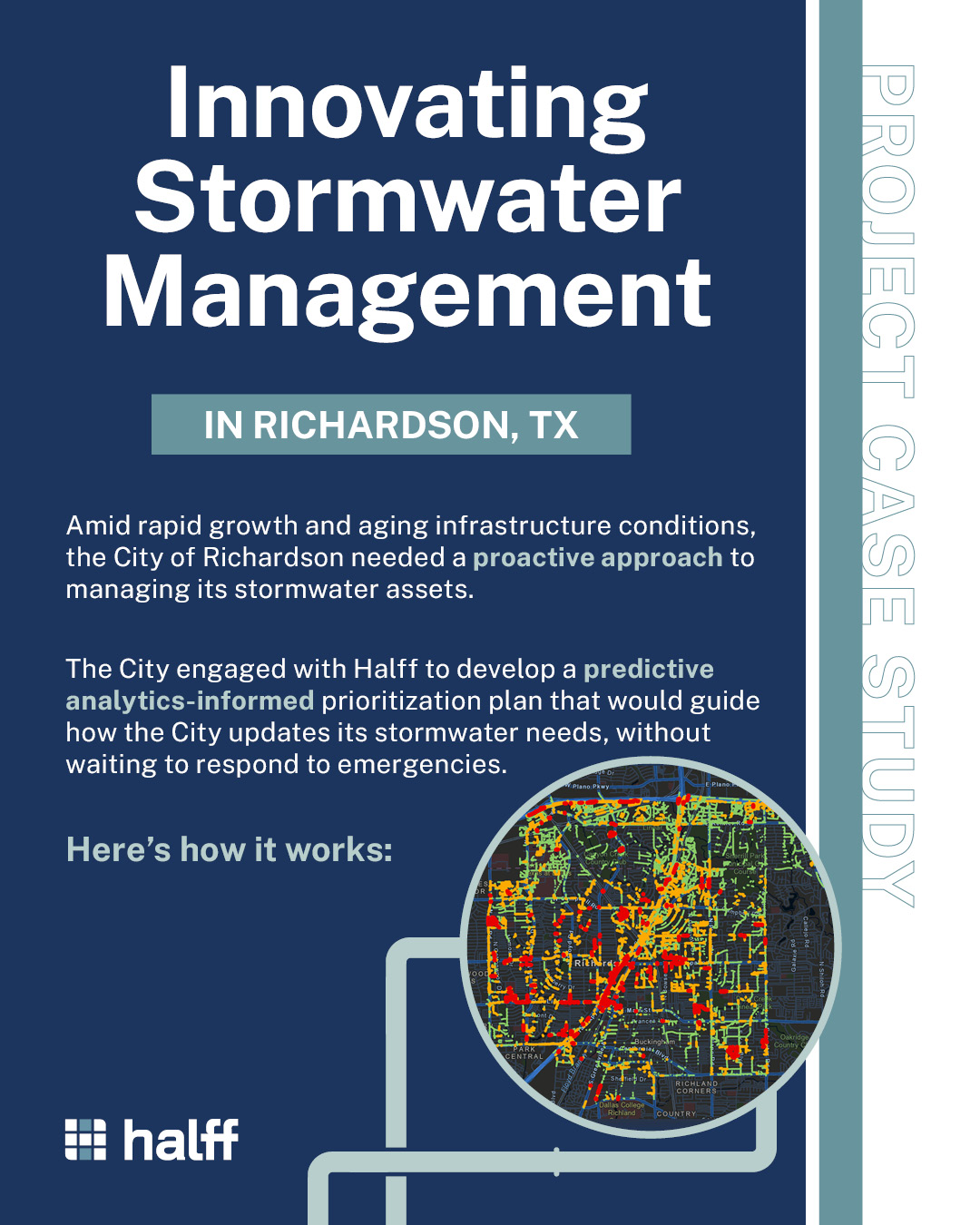
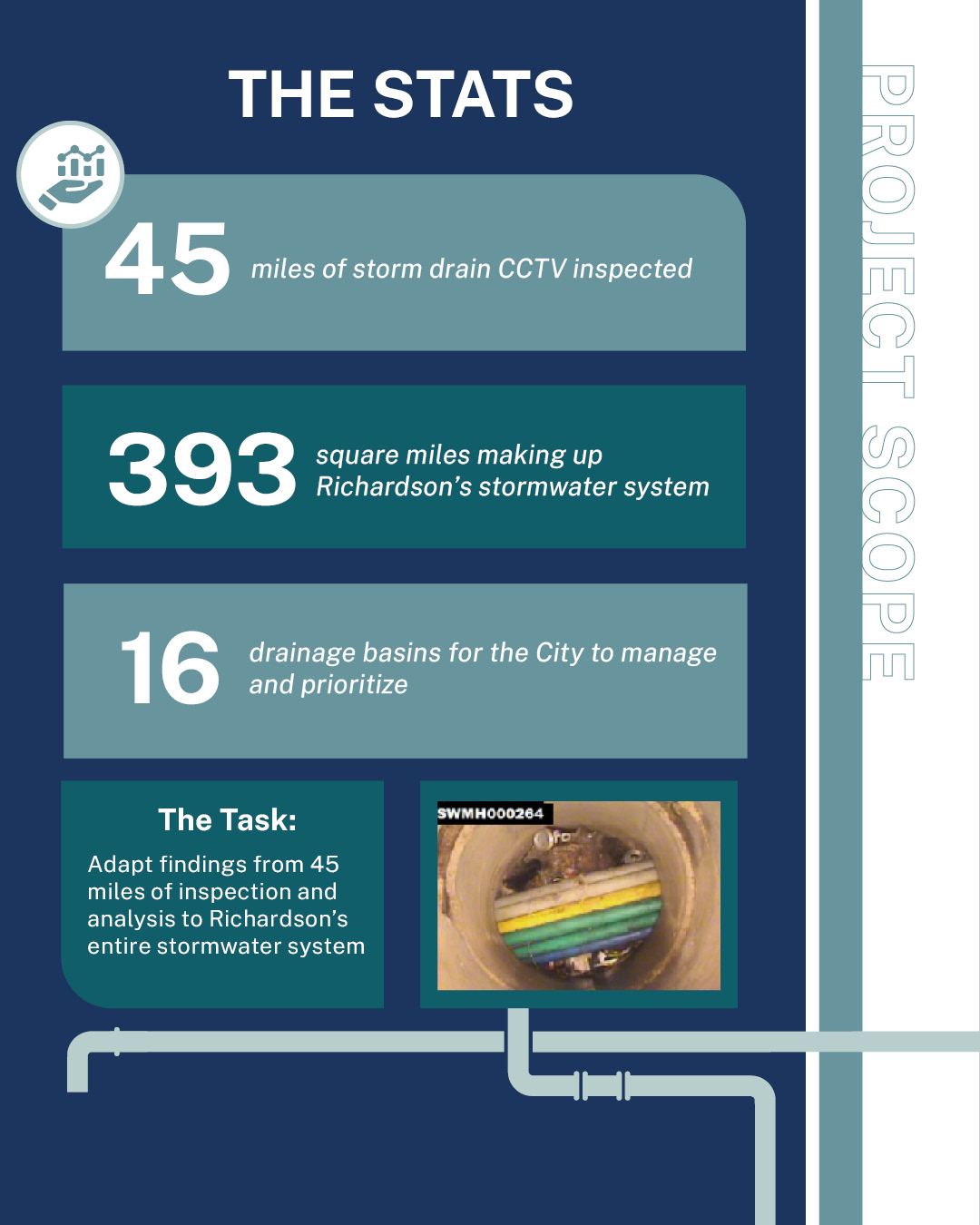
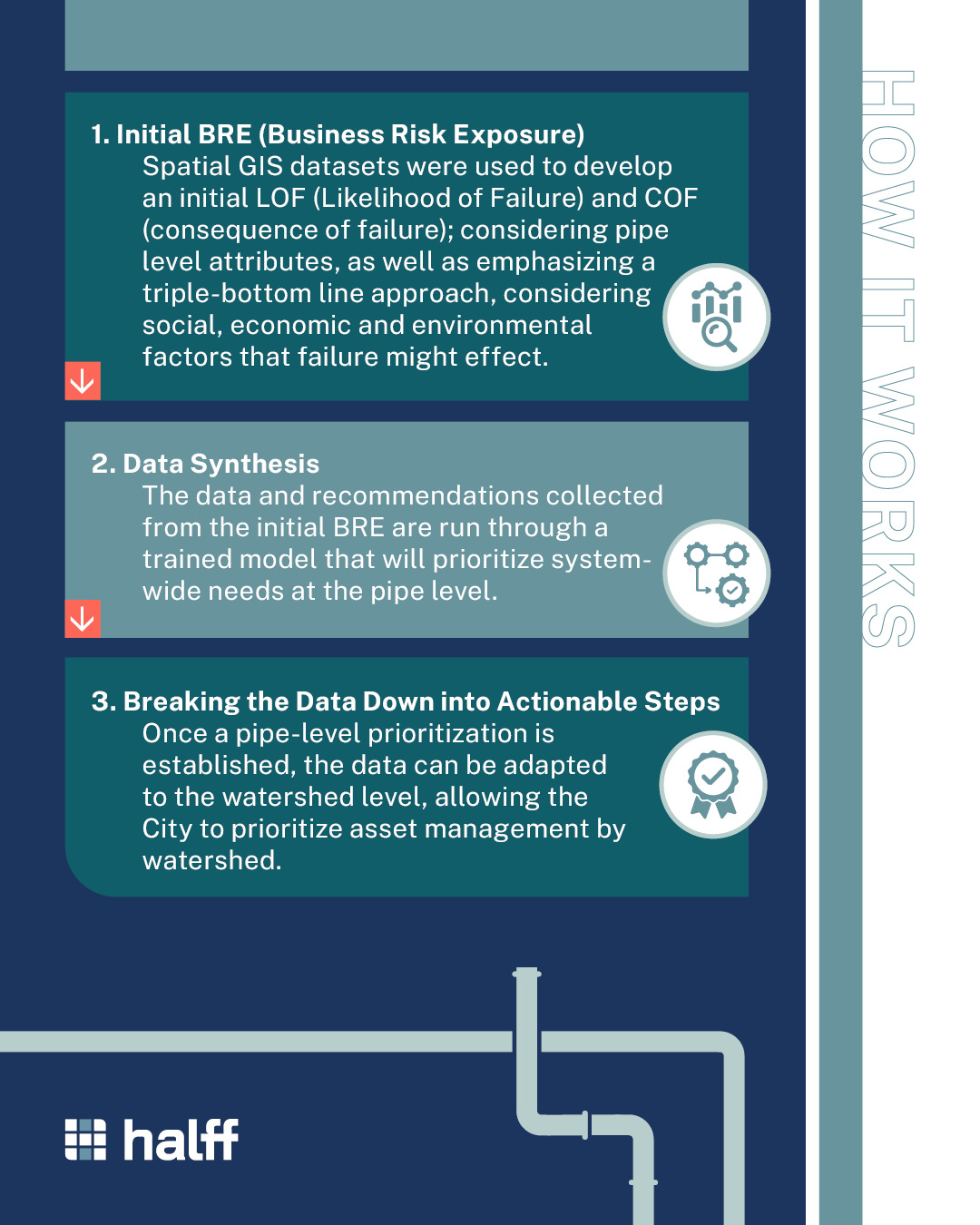
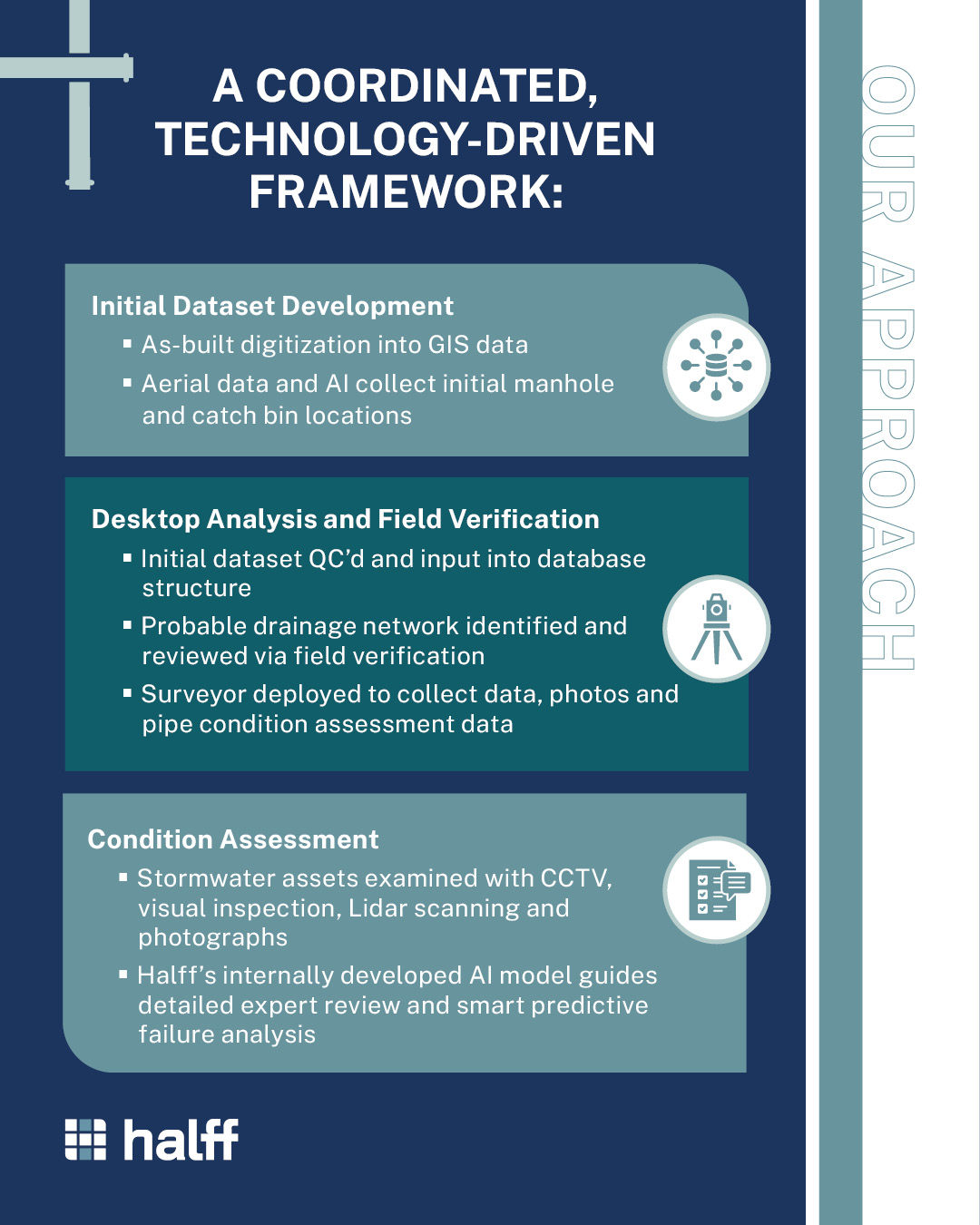
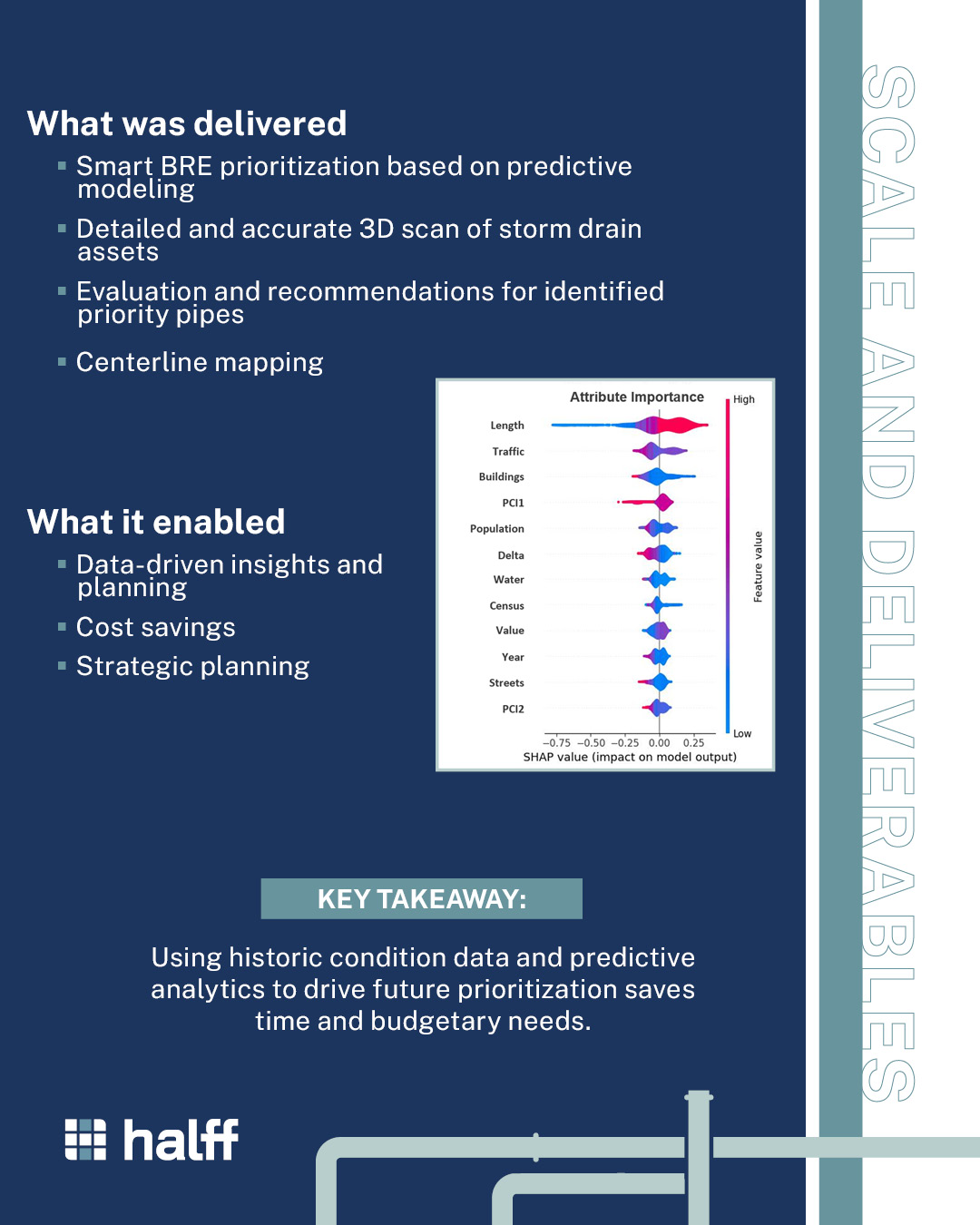
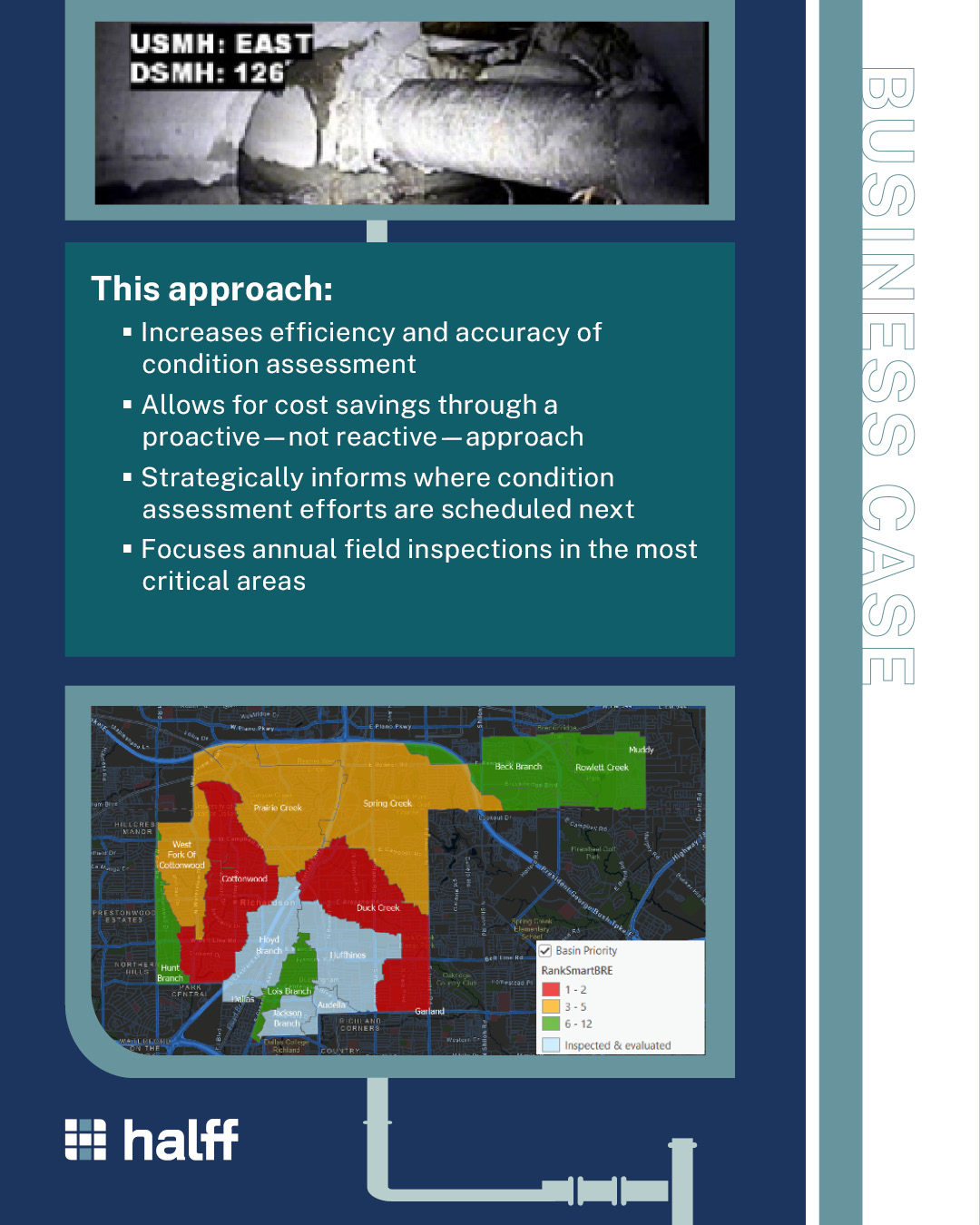
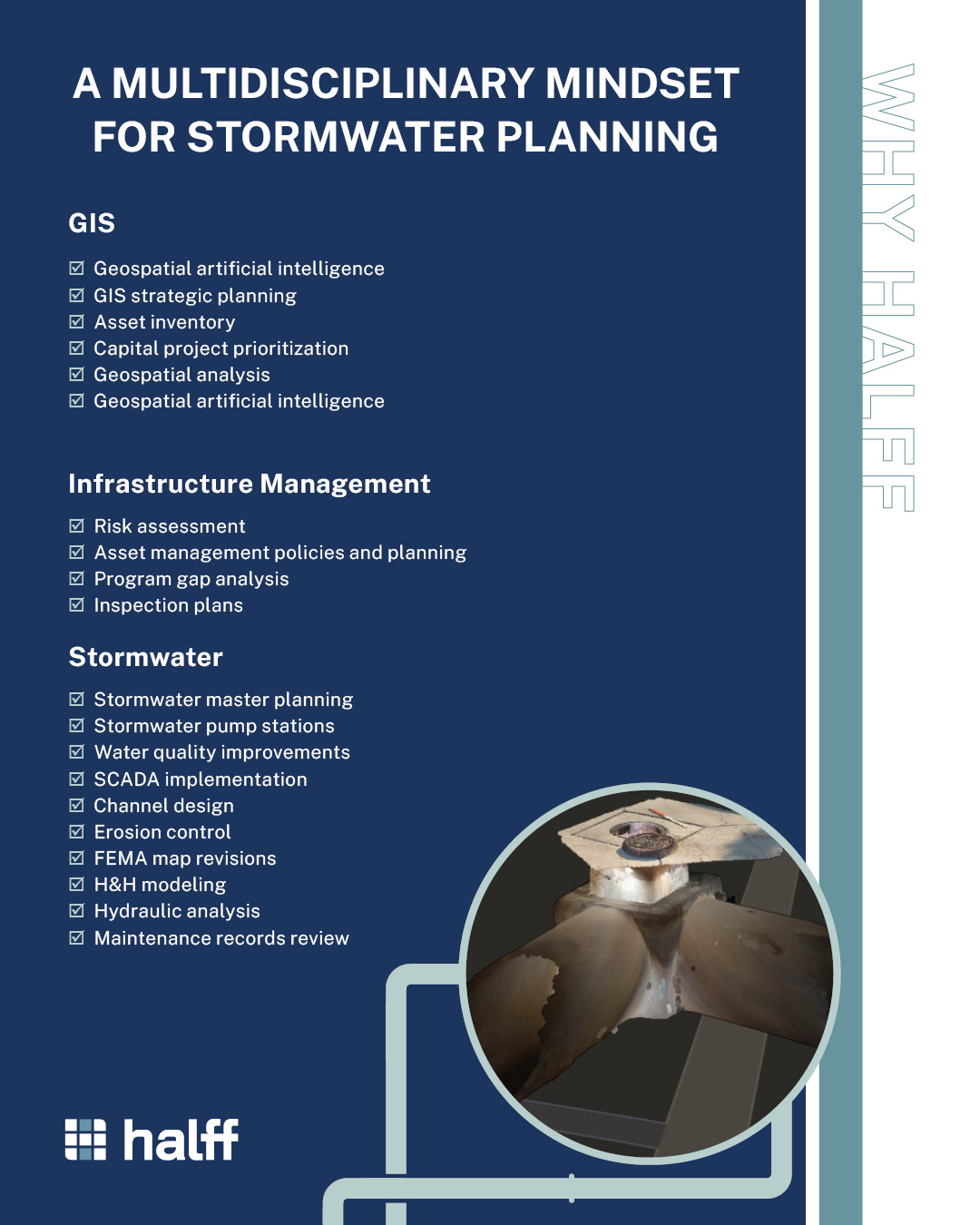


Click through above for a case study of how Halff has applied this method.
A Smart Prioritization Process
On the condition assessment side, Halff has developed a model that is used to guide a detailed expert review of assets, connecting CCTV data to actionable insights. This increases both the efficiency and accuracy of condition assessments.
That includes leveraging data from a portion of inspected assets to inform overall asset management strategy for one municipality. Inspection, likelihood of failure and prioritization data are pulled from a sample of assets within a city or county and used as a training set to create predictive prioritization needs at the pipe level for an entire system.
Those recommendations are then used to prioritize a city or county’s regional watershed needs, setting the stage for a strategic stormwater asset management plan. This positions municipalities for proactive and cost-effective asset management as opposed to reactive response. It is more costly to repair sinkholes than it is to methodically maintain stormwater infrastructure through the course of a maintenance plan.
⇒The Takeaway: Inspecting just 10% of your stormwater pipes can generate the predictive data needed to prioritize and manage risk across 100% of your system.
Of course, while the options seem limitless with AI and predictive analytics, working with a trusted partner to incorporate these tools is essential. Tools change, and a good partner keeps pace with updates and leverages them accordingly.
Customization matters. AI use and automation needs vary depending on what is available within each area and what the goal is. And humans are essential to the asset inventory and assessment process. AI can complete many baseline tasks, but trusted human advisors are needed to review data and finalize datasets.
⇒The Takeaway: AI can’t be used in a vacuum. Trusted human advisors must be a part of the process for data review and application.
Building On Your Condition Assessment
Zooming out, a condition assessment is just one critical part of a broader puzzle. Sometimes, a pipe may be rated poorly not because of its condition, but because of a capacity issue — perhaps a stormwater management facility is needed in the area, or the pipe size needs to be increased.
Halff’s hydraulic modeling and stormwater master planning services can take asset inventory to the next level by providing full system analysis. This not only allows entities to know what each pipe’s level of service is within their system, it also determines the size it should be to meet the desired level of service.
⇒The Takeaway: Beyond a condition assessment, a full system analysis assesses existing level of service and identifies opportunities for improvements.
Funding Strategies
There are statewide efforts being made to address stormwater planning needs. This year, the Georgia Environmental Finance Authority (GEFA) launched a grant funding initiative for water infrastructure planning efforts. The Water Infrastructure Planning Program (WIPP) will provide $5 million (granting up to $150,000 per project and $250,000 for collaborations) in funding for planning efforts that protect and conserve water resources in the state. That includes planning for dedicated stormwater funding, as well as stormwater management planning for small communities without MS4 permits or where MS4 requirements are newly applicable.
Halff worked with Georgia communities to create and submit WIPP grant applications prior to the Aug. 31 deadline. GEFA anticipates sharing award announcements in November.
⇒The Takeaway: The GEFA grant is a new state-level opportunity to fund stormwater planning efforts.
Beyond the Grant Program
In addition to grant programs, communities can best strategize for stormwater infrastructure funding needs by working with funding resources professionals to prepare a funding strategy.
“If you wait for a grant to be announced, you’re already behind the ball,” Halff Funding Resources Lead Lisa King says. While GEFA’s WIPP program was a unique opportunity to chase a new bucket of funding, the better approach is to have a long-range plan in place that can optimize for funding opportunities.
In Halff’s experience, funding successes are born out of building an established, trusting relationship that connects the community with Halff’s multidisciplinary capabilities. By coordinating with Halff’s in-house engineering professionals, our Funding Resources team leverages project insights to inform funding strategy.
In fact, that coordination has historically allowed the Funding Resources team to influence design decisions to make projects more competitive on the funding side. “And that’s really the X factor,” Lisa says.
⇒The Takeaway: As Georgia communities grapple with the need for stormwater asset management funding, working ahead of the curve to establish long-range funding strategy plans is a key step.
Ready to Get Started?
Contact our Atlanta Water Resources or Funding Resources teams to kickstart your stormwater management plans. Reach out to Water Resources Senior Project Manager Kandace Kea (kkea@halff.com) or Funding Resources Lead Lisa King (lking@halff.com).

Recent Stories

Halff’s Marcus Taylor Receives ASCE Louisiana Section Outstanding Civil Engineer Award
SHREVEPORT, La — Halff’s Public Works Team Leader Marcus Taylor, PE, was named the 2026 Outstanding Civil Engineer by the…

Closing the Gap: What It Takes to Complete a Regional Connection
On a map, the missing piece of Corporate Drive in Lewisville, Texas looks simple: connect one end of the roadway…