
Project Spotlight: Designing FDOT’s MCSAW Weigh-in-Motion Network
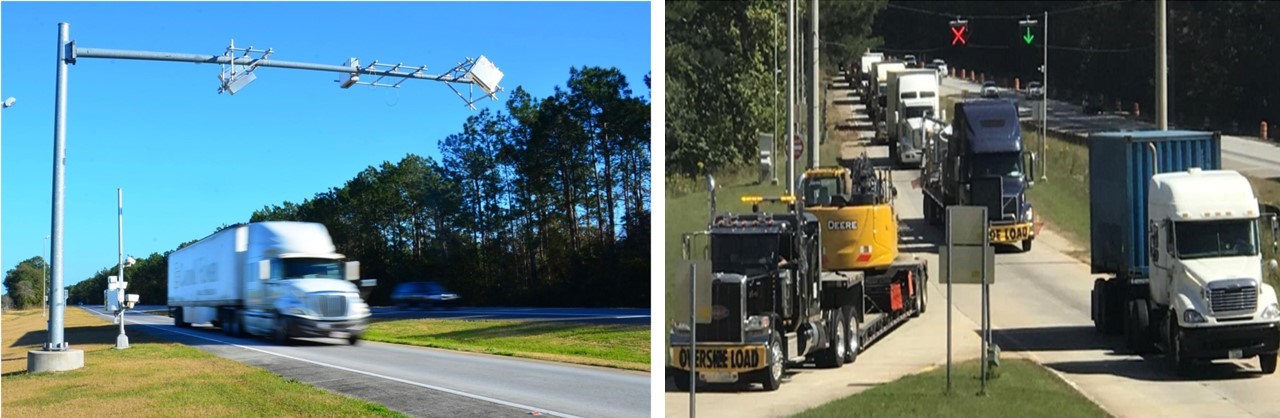
Can you imagine what it takes to connect driver data across an entire state?
Florida contains an impressive fiber optic network spanning 2,000+ miles. Behind this cutting-edge network is the design work of Halff’s ITS team to develop more efficient, scalable truck ramps and weigh station infrastructure.
Background
As the subconsultant for WGI, Inc., Halff is supporting development of a Weigh-In-Motion (WIM) screening system in Flagler County, FDOT District 5.
Halff is operating under a continuing services contract for FDOT’s Central Office Motor Carrier Size and Weight (MCSAW), designing and developing various projects; notably the truck bypass system ramp design.
The “Weight” Is Over
Static truck scales are not only costly to maintain, but a massive slow down for truckers.
The purpose of the mainline weigh-in-motion by-pass was to minimize the number of trucks being pulled in for static scales and weights. The initial goal was to achieve a 60% reduction of trucks being pulled in for static weights. Results surpassed this goal, as the new weigh station achieved an 80% reduction within the first few months of the first location being opened.
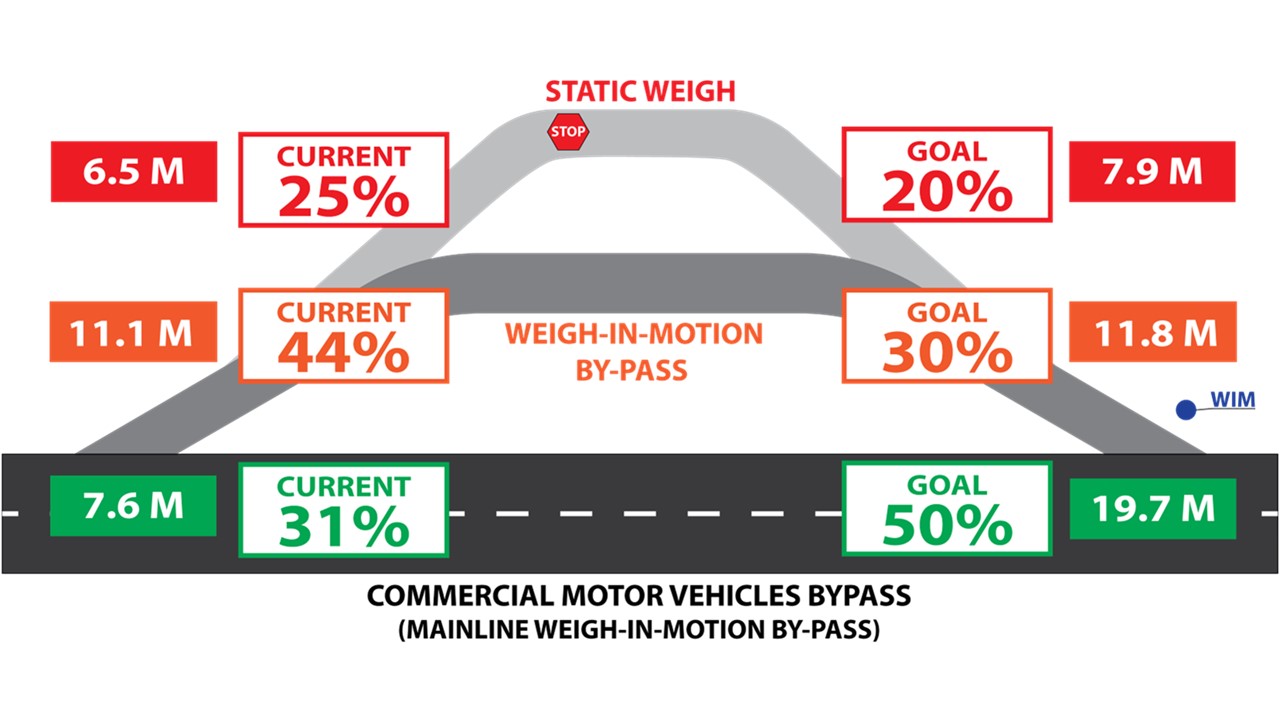
Reduced wear and tear on the static scales is not the only advantage. Permitted loads will be able to be more easily detected by scanning the truck’s DOT number. Plus, the new system on the main line requires less maintenance compared to static scales, saving both time and money for truck drivers and FDOT.
These weigh-in-motion stations also use advanced technology to capture tire anomalies (such as low pressure and low tread), and detect if truck loads are oversized or overweight. All this valuable data ultimately helps generate revenue for the state of Florida to then reinvest in the motor carrier system.
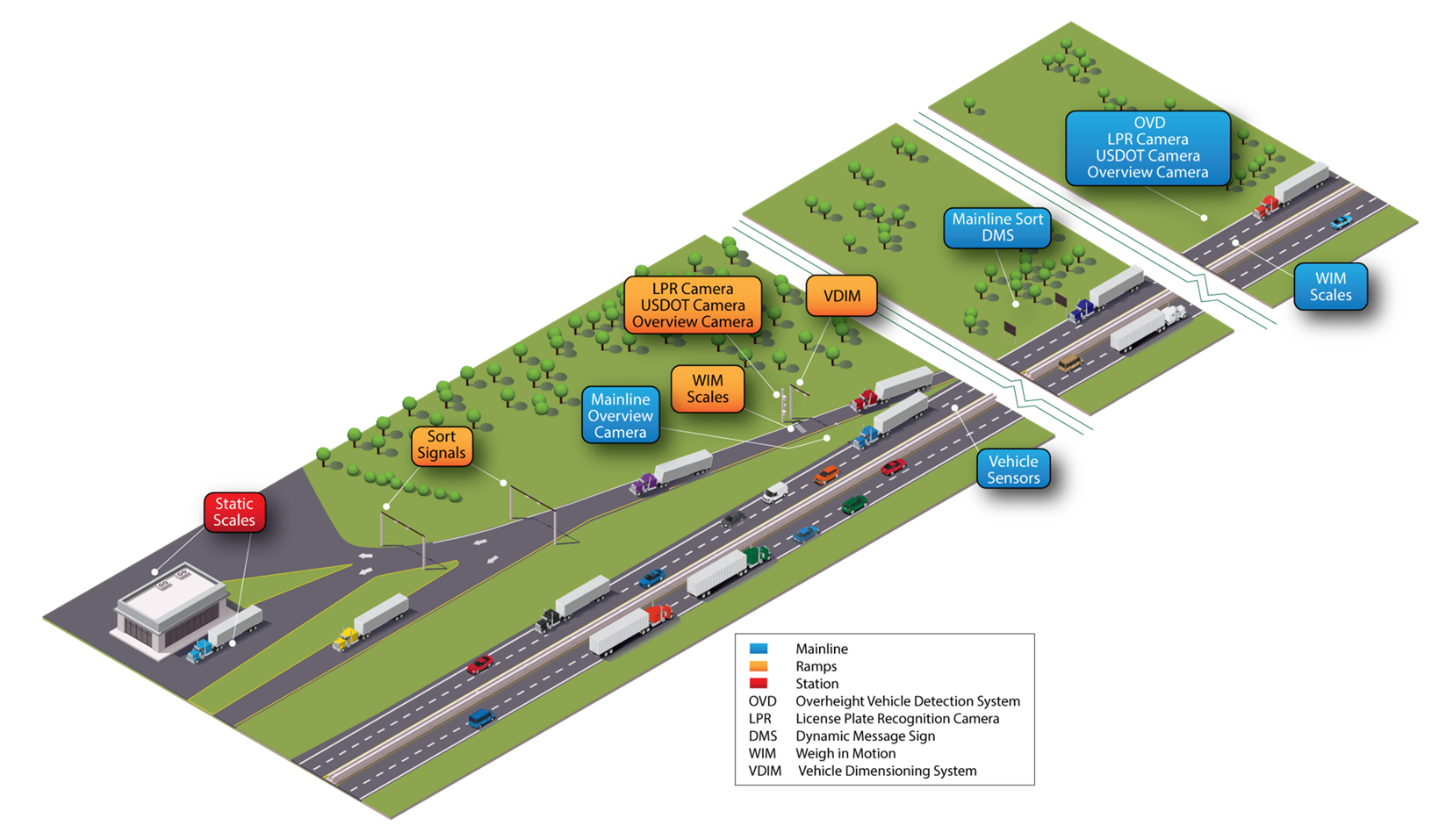
Depiction of weigh-in-motion stations that provide seamless, efficient access for trucks along routes.
Building Synergy Across the State
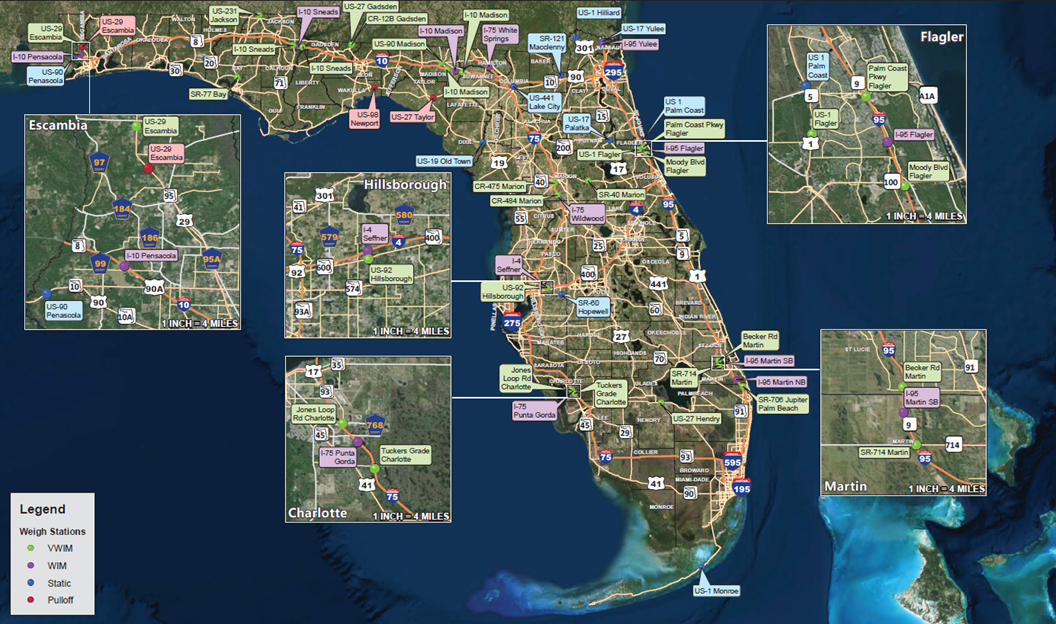
A project in conjunction with these newly-advanced weigh-in-motion stations is the statewide network.
The statewide network designed by Halff and FDOT connects motor carrier weigh stations with fiber optic networks—bundled together into one tracking system.
This state-of-the-art system spanning 2,000+ miles across Florida provides ways for these motor carrier stations to communicate with each other, syndicating data cohesively. It can know when and where a truck has driven, at what time and what its weighs were. It ultimately saves commercial truckers and FDOT time and money by more efficiently screening vehicles required to enter the static weigh stations.
The result is not only improved communication and efficiency, but newfound insights into travel patterns and other key data that will shape the future of efficient traffic operations in Florida.
Halff’s Role in the Road to Success
Halff has performed three (Flagler, Yulee and Martin) out of the eight weigh stations. Halff’s Senior ITS engineer Bryan Hubbard originally conceived the idea for the project during his tenure at FDOT, adding a deeper layer of understanding and expertise.
“During the project, new signage had to be updated so drivers could better see it,” says Halff’s Senior Team Leader of Transportation Matthew Thibault. “From an end user standpoint, there were multiple iterations that had to take place to properly clarify and improve the system.”
The project involved iterative updates to signage and system timings based on driver feedback. Halff’s ITS team helped implement new signage to further improve driver understanding and system efficiency, based on feedback and observed issues.
Drivers will benefit from the efficiencies created while minimizing the amount of over-hour service (10 hours of drive time per day).
Driving Innovation Forward
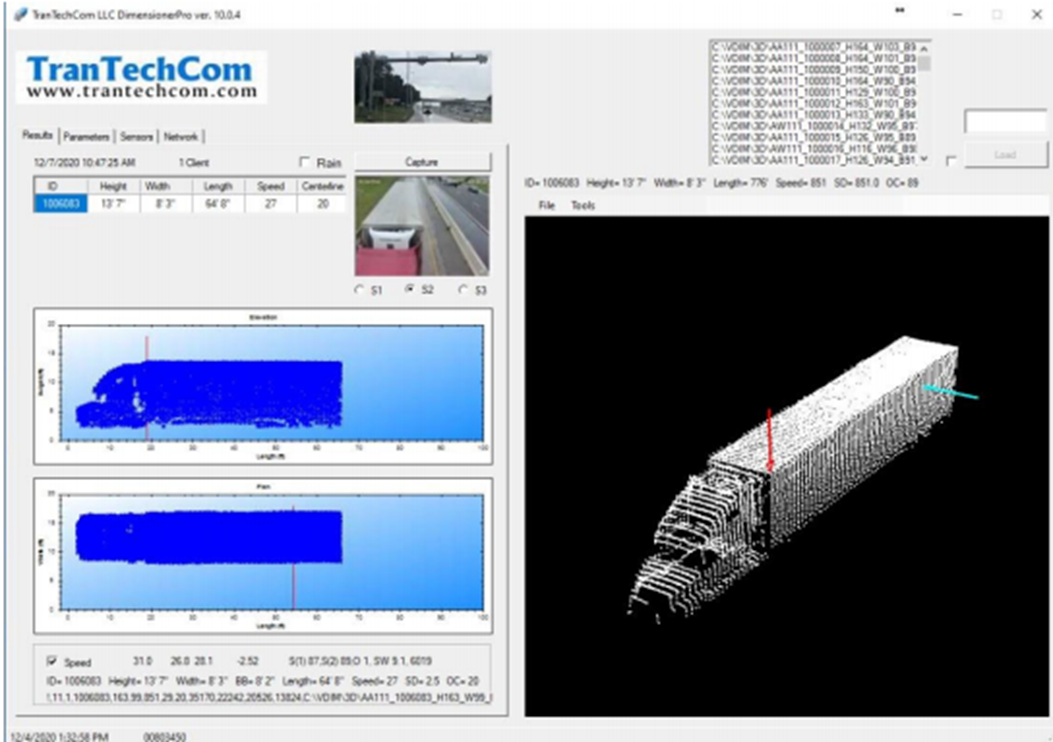
Leaps and bounds of progress is being made while the statewide network is still under development. The foundation of valuable data provided by these weigh-in-motion stations will be an integral piece for the future of traffic operations and capacity projects.
The weigh stations are a scalable and buildable project. Eventually, more technology can be added, like hazard placard readers and thermal technology. It also enables growth and system expansion to virtual sites.
The innovation doesn’t stop there. All this data also has potential for the planning community. As the system picks up on the origins and destinations of traffic patterns of these trucks, data can be delivered over to traffic operations groups that start to understand the patterns of trucks and which corridors are commonly being utilized. This feedback will help determine what projects need to be assigned, such as resurfacing, pavement rehabilitations and more.
Tying each WIM station together with fiber optic networks, AI will eventually be able to detect patterns and driver routines.
Florida’s ITS network is shifting into high gear, connecting more efficient weigh-in-motion transportation stations with smarter and faster insights. And when it comes to innovation for the future, Florida’s infrastructure is certainly on the right track.
Need expert help from Halff? Our talented Transportation and ITS professionals bring years of expertise and knowledge for your projects.
Let Halff help you take the first step by contacting Senior Team Leader of Transportation Matthew Thibault (mThibault@halff.com).
Recent Stories

Building What Lasts at the Coast: Q&A with Coastal Engineering Lead Kazi Sadid
How is coastal engineering a symphony of engineering design and the natural environment? Where weather, water and environmental systems collide,…

Inside Halff: A Look at April 2026
Halff celebrated a month of recognition as project achievements and employee honors were highlighted across the firm, alongside continued community…